
SEO Strategies to Improve Your Website Ranking on Google
Introduction
In today’s digital world, having a website is not enough to grow a business online. Your website also needs to appear in search engine results when potential customers search for products or services related to your business.
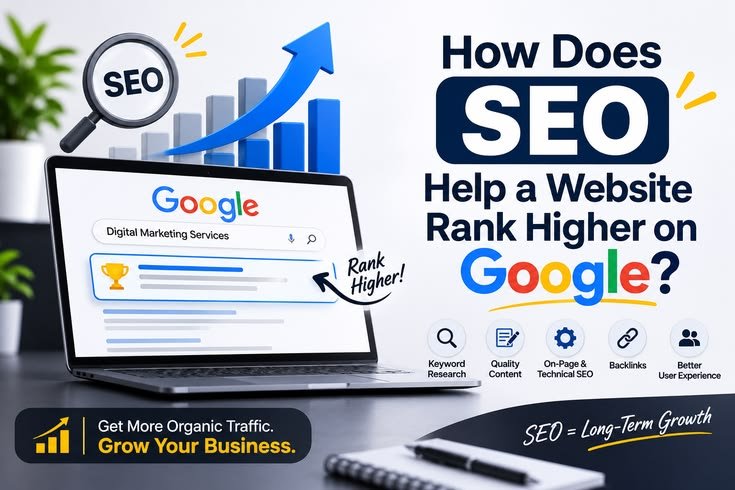
Search Engine Optimization (SEO) is one of the most effective digital marketing strategies for improving website visibility and attracting organic traffic. By following the right SEO techniques, businesses can improve their website performance, reach their target audience, and increase online growth.
In this blog, we will explore effective SEO strategies that can help improve your website ranking on Google.
What Is SEO?
Search Engine Optimization (SEO) refers to the techniques used to improve a website’s position in search engine results. It focuses on making website content, page structure, keywords, and technical elements more search-engine-friendly.
SEO helps search engines understand website pages and makes it easier for users to find relevant information when searching online.
The primary purpose of SEO is to bring interested visitors to a website through unpaid search results rather than relying only on advertisements.
Why Is SEO Important for Your Website?
SEO is an essential part of developing a successful online presence. It helps businesses connect with people searching for related products or services and makes their websites easier to find on search engines.
With proper SEO practices, businesses can improve their online reach, attract relevant audiences, and create better opportunities for growth.e website growth.achieve long-term growth online..
Increases Organic Traffic: Helps attract visitors through unpaid search results.
Improves Website Visibility: Makes it easier for people to discover your business online.
Builds Credibility and Trust: Websites appearing in relevant search results can gain user confidence.
Generates Quality Leads: Attracts people who are actively searching for your products or services.
Provides Long-Term Results: Consistent SEO improvements can support sustainable website growth.
10 Effective SEO Strategies to Improve Your Google Ranking
1. Perform Keyword Research
Keyword research is the foundation of a successful SEO strategy. It helps identify the words and phrases people use when searching for information, products, or services.
Choose relevant keywords that match your website content and your audience’s search intent.
Useful keyword research tools include:
Google Keyword Planner
Google Trends
Semrush
Ahrefs
.
2. Optimize Your Website Content
High-quality content is important for SEO. Create original, informative, and useful content that answers your audience’s questions.
Use your target keywords naturally in:
Page titles
Headings and subheadings
Introduction and body content
Image alt text
Meta descriptions
3. Improve On-Page SEO
On-Page SEO involves optimizing individual web pages to improve their visibility in search engines.
Writing SEO-friendly title tags.
Creating unique meta descriptions.
Using proper heading structures (H1, H2, H3).
Adding relevant internal links.
Optimizing images with descriptive alt text.
Creating short and readable URLs.
s
4. Focus on Technical SEO
Technical SEO helps search engines crawl, understand, and index your website effectively.
Creating and submitting an XML sitemap.
Checking your robots.txt file.
Fixing broken links.
Using HTTPS security.
Improving website loading speed.
Ensuring mobile-friendly website design.
Fixing indexing and crawling issues.
5. Create High-Quality Backlinks
Backlinks are links from other websites that point to your website. Quality backlinks can help improve your website’s authority and credibility.
Guest posting on relevant websites.
Creating valuable and shareable content.
Building relationships with industry websites.
Getting listed in relevant business directories.
Earning natural links through useful resources.
Focus on relevant, trustworthy backlinks rather than collecting a large number of low-quality links.
6. Optimize Your Website for Mobile Devices
Many people access websites through smartphones and tablets. A mobile-friendly website provides a better user experience and helps visitors navigate your pages easily.
Responsive design.
Readable text.
Easy navigation.
Properly sized images.
Mobile-friendly buttons and forms.
7. Improve Website Loading Speed
A fast-loading website creates a better browsing experience and helps visitors explore your pages without delays. If a website takes too long to load, users may lose interest and leave.
Reduce image file sizes without affecting quality.
Remove unnecessary scripts and plugins.
Enable browser caching.
Select a reliable web hosting service.
Optimize website files and code.
You can also use tools such as Google PageSpeed Insights to check website performance and find areas that need improvement.
8. Use Internal Linking
Internal linking means connecting one page of your website to another relevant page.
For example, a blog about SEO can link to your SEO service page. This helps visitors discover more useful information and allows search engines to understand the relationship between your website pages.
Use descriptive anchor text and link only to relevant content.
9. Optimize Images for SEO
Images make website content more attractive and engaging. Image optimization also helps search engines understand your visual content.
Use descriptive image file names.
Add relevant alt text.
Compress images before uploading.
Choose suitable image formats.
Use properly sized images.
10. Track Your SEO Performance
SEO requires continuous monitoring and improvement. Tracking website performance helps you understand which strategies are working and where improvements are needed.
Useful SEO tools include:
Google Search Console: Monitor search performance, indexing, and website issues.
Google Analytics 4: Understand website traffic and visitor behaviour.
Google PageSpeed Insights: Analyze website performance and loading speed.
Semrush: Research keywords, analyze competitors, and monitor SEO performance.
Common SEO Mistakes to Avoid
Using too many keywords unnaturally.
Publishing duplicate or low-quality content.
Ignoring mobile optimization.
Using irrelevant backlinks.
Forgetting image alt text.
Ignoring broken links and technical issues.
Neglecting regular content updates.
How Long Does SEO Take to Show Results?
SEO is a long-term digital marketing strategy. Results do not usually appear overnight. The time required depends on factors such as website condition, competition, keyword difficulty, content quality, and SEO efforts.
Consistent optimization, useful content, and regular performance monitoring can help improve search visibility over time.
Conclusion
Improving your website ranking on Google requires a combination of effective SEO strategies, quality content, technical optimization, and continuous monitoring.
By focusing on keyword research, On-Page SEO, Technical SEO, link building, mobile optimization, and website performance, businesses can improve their online visibility and attract more organic traffic.
SEO is not just about achieving higher rankings; it is about providing valuable information, creating a better user experience, and connecting with the right audience. With consistent SEO efforts, your website can build a strong online presence and support long-term business growth.